One “long” multiplication problem … revisited

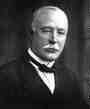
Frank Nelson Cole

Here’s a simple question for you – What are the factors of 147,573,952,589,676,412,927?  Impossible?  Well, before you run off and find your calculator, would it help to mention that someone found its factors using only a pencil and paper?  It’s true.  On October 31, 1903, Frank Cole did just that.  He factored the number 147,573,952,589,676,412,927 – with just a pencil and paper!

What makes the story so legendary is the way Cole revealed the factors.  At a meeting of the American Mathematical Society, Cole presented his paper titled “On the factoring of large numbers.”  Usually, when a mathematician presents a paper, he or she stands on a stage in front of a blackboard, lecturing to the audience about the particular topic of their paper.  However, Cole’s lecture was different.  He did not speak a single word.  He simply went to the board, and began to calculate.  On one side of the board, he calculated 267 – 1 = 147,573,952,589,676,412,927 by hand.  Then he went to the other side of the board and worked out the product of 193,707,721 and 761,838,257,287, the factors of 147,573,952,589,676,412,927.  After spending the silent hour working out the calculations, Cole simply turned around and went back to his seat, completely silent!  The audience erupted into a standing ovation.  Talk about making a dramatic presentation!  Later, when asked how long it took him to find the factors, he responded by saying “three years of Sundays.”

So, why would anyone in their right mind take the time to factor such a big number you ask?  Why this one?  Why the number 267 – 1?  It turns out that this number is related to something known as Mersenne Primes.  First popularized by the French monk Marin Mersenne, primes of this form are generated using the formula 2p − 1 (where p is prime).  For example:  if p = 2, then 2– 1 = 3 or if p = 5, then 2– 1 = 31.  And, as you know, both 5 and 31 are prime numbers.

I know what you are thinking – I thought it was impossible to have a formula that generates primes.  Well, yes and no.  While there is no formula that will generate ALL prime numbers, there are many formulas that generate some primes.  Unfortunately, as with all prime formulas, even this formula doesn’t always work.  For example, if p = 11, then 211 – 1 = 2047.  2047 is a composite number with factors 23 and 89.

So, why bother with a formula that inconsistently generates primes?  Well, mathematicians are fun people.  And, like most people, they are attracted to big things – like big prime numbers.  Since this formula can generate some pretty massive numbers, the potential for monstrous size prime numbers exists.  And, what’s better than massive prime numbers?  Nothing!  In fact, some mathematicians are so obsessed with really big primes that they have started an internet search for big primes called GIMPS –  the Great Internet Mersenne Prime Search.  If you go to this website, you can download a program to help out with the search!  To date, there have been 47 Mersenne Primes discovered.  The biggest, discovered on April 12, 2011, is a 12,837,064 digit number.  (Click here to see the number.)

Like many of the massive numbers generated by Mersenne’s formula, 267 – 1 had the potential to be prime.  However, no one was sure because there are no effective techniques for factoring large numbers.  Finally, in 1876, Edouard Lucas made the first breakthrough by proving that this number could not be prime.  However, he was unable to find its factors.  Well, there is no greater enticement to a mathematician than a good mystery.  So, the search began.  And, thanks to Frank Cole, the mystery was solved on October 31, 1903.

For someone like me, a triumph like this, in the age of technology, should be celebrated!  Well done!

Happy Birthday, Carl Friedrich Gauss!

Happy Birthday, Gauss!

Happy Birthday to Carl Friedrich Gauss!  Born on April 30, 1777 in Brunswick, Germany, Gauss is considered by most to be the greatest mathematician of all time.

Like many great mathematicians, Gauss showed his incredible mental abilities at a young age.  Before the age of three, Gauss taught himself to read by simply asking his parents for the pronunciations of the letters.  By the age of three, Gauss had a mastery of arithmetic as is often retold in the story of him finding a mistake in the arithmetic of his father’s payroll calculations.  During his teen years, Gauss was improving upon the proofs of NewtonEuler and Lagrange, determined to make the proofs more rigorous in nature.  In fact, this effort forever changed the way mathematical proofs are written.

However, despite all of these early achievements, Gauss was still considering a career in linguistics instead of mathematics.  Thankfully, for the sake of mathematics, this changed on March 30, 1796.  It is on this day that Gauss wrote in his diary that he had discovered a solution to one of the greatest unsolved problems of Euclidean geometry, the construction of regular polygons.  So impressed with the solution to this problem, Gauss decided to dedicate his life to mathematics.  It wasn’t long before Gauss would impress himself again.  On April 8, 1796, Gauss proved the Law of Quadratic Reciprocity.  His favorite of all the theorems, he is credited with at least a half-dozen proofs of it during his lifetime.

As Gauss’ life continued, so did his achievements.  Too many to mention specifically, Gauss made groundbreaking contributions in Number Theory, Differential Geometry, Statistics, the Method of Least Squares, Complex Analysis and non-Euclidean Geometry.  In 1801, Gauss published Disquisitiones Arithmeticae, considered by many to be one of the greatest achievements in all of mathematics.  Beyond mathematics, Gauss also rewrote physics with major contributions to the fields of electricity and magnetism.  As if that weren’t enough, Gauss was also a bit of an inventor.  He is credited with inventing the heliotrope to help with his job as a surveyor.  And, with colleague Wilhelm Weber, he was the first to invent the telegraph.

If there is to be one major criticism of Gauss, it is with his reluctance to publish his discoveries.  Gauss, ever the perfectionist, did not like to publish many of the results of his research, fearing that they were never perfect enough.  Or, as Gauss would describe it later in life, “pauca sed matura” (few, but ripe).  In fact, most of what Gauss discovered was not known until after his death when colleagues went through his mathematical diary.  Looking at this as a major travesty to mathematics, it is the opinion of the famous mathematician, historian and mathematical romantic E.T. Bell that Gauss’ reluctance to publish his discoveries set mathematics back at least 50 years.

If you are interested in learning more about Gauss, please check out some of these resources:

If you would like to see my mathematical collection, some of which is dedicated to Gauss, you can click here.

Happy Birthday, Leonhard Euler!

Happy Birthday!

Happy Birthday to Leonhard Euler!

What can I say about Leonhard Euler that hasn’t already been said?  Not much.  Born in Basel, Switzerland on April 15, 1707, Euler showed his mathematical talents early.  By the age of 7, Euler’s father hired a private mathematics tutor to work with him.  By the age of 13, Euler was attending lectures at the University of Basel.

At the age of 14, Euler began attending the University as a student.  It is here that he caught the eye of the great Johann Bernoulli (It seems that everything this man touched turned to gold!)  According to Euler, “I soon found an opportunity to be introduced to a famous professor Johann Bernoulli. … True, he was very busy and so refused flatly to give me private lessons; but he gave me much more valuable advice to start reading more difficult mathematical books on my own and to study them as diligently as I could; if I came across some obstacle or difficulty, I was given permission to visit him freely every Sunday afternoon and he kindly explained to me everything I could not understand …”

Once finished at the University, Euler spent most of his professional career in Russia at the St. Petersburg Academy of Sciences.  During his career, Euler made significant contributions to the fields of analytic geometry, geometry, number theory, trigonometry and calculus as well as in several areas of physics.

All was not smooth sailing for Euler, however.  In 1738, he lost one of his eyes in an accident from an experiment involving light diffraction.  In 1771, Euler contracted an illness that left him almost completely blind in his remaining eye.  However, despite being essentially blind, Euler still managed to produce hundreds of original mathematical papers.

By the time of his death in 1783, Euler is credited with over 900 mathematical publications.  He was so prolific a mathematician that the St. Petersburg Academy of Sciences continued to publish his work for nearly 50 years after his death!

If you are interested in reading more about Euler, check out one of these resources:

If you would like to see my mathematical collection, some of which is dedicated to Euler, you can click here.

Happy Birthday, Paul Erdos!

Happy Birthday!

March 26 is the birthday of one of the greatest mathematicians of all time, Paul Erdos.  Considering this fact, it should be easy to write some sort of tribute, right?  Well, maybe not.  When I started to write this post celebrating his birthday, I was very intimidated.  I was worried that, no matter what I wrote, I wouldn’t write enough to honor his memory.  I even wondered what I should write about.

Maybe I should write about the fact that he was gifted mathematician?  Erdos is said to rival Leonard Euler as the most prolific mathematician in history, having produced some 1500 mathematical papers, many with collaborators.

Maybe I should write about his quirks?  He could be known to appear at your doorstep, unannounced, for an extended visit, announcing that his “brain is open”.  Legend has it that he had trouble tying his shoes, buttering his toast and opening containers of orange juice.  He loved ping-pong.  Even his childhood was unique.

Maybe I should write about Erdos as the philanthropist?  Erdos had little need for money so most of the money he earned was donated … whether to charities, needy friends or to set up scholarships.  If there was someone, anywhere, who needed financial help, Erdos was there.

Or, maybe I should leave it up to a professional wordsmith?  In 1996, columnist Charles Krauthammer wrote a beautiful and touching tribute to Erdos, titled “Paul Erdos, Sweet Genius”.   I think I made the right choice.

If this isn’t enough and you are interested in learning more about Paul Erdos, you can read a more academic biography by clicking on this link.  If reading a book is more to your liking, here are two to consider.

  • The Man Who Loved Only Numbers by Paul Hoffman  (Click here to read my brief synopsis.)
  • My Brain is Open by Bruce Schechter  (Click here to read my brief synopsis.)

Happy Birthday, Paul!

Calling all Einstein fans!

For the first time ever, The Hebrew University of Jerusalem is releasing its collection of Albert Einstein‘s archives.  (Read the press release.)  Included are digital images of personal correspondences, speeches, fan mail, and most importantly, notebooks containing his groundbreaking scientific ideas.  These are the real deal … the images are so crisp that you can see the graininess of the pencil lead and the inconsistency of his fountain pen ink.  It is one of the most amazing things I have ever seen!

To begin the fun, click here:  http://alberteinstein.info/gallery/gallery.html