The Fifth Postulate by Jason Socrates Bardi

I just finished a great book by Jason Socrates Bardi, called The Fifth Postulate.  It really is a “must-read” for anyone interested in trying to understand how mathematicians think (and geometry teachers looking to leave the realm of the textbook!).

For thousands of years, mathematicians have spent their careers trying to prove the Parallel Postulate, only to find out that all of their attempts have failed.  It took the genius of people like Gauss to think, “maybe the postulate doesn’t need to be true.”  With that thought (and a lot of work), we have the birth of non-Euclidean geometry.

The Fifth Postulate gives a great historical overview of the attempts to prove the Parallel Postulate as well as thought process leading to its eventual rejection.  It is an extremely entertaining read and has some great biographies of Gauss, Lobachevsky and Bolyai.  As with most math books written today, it keeps a “general interest” audience in mind and steers clear of the heavy-duty mathematics of non-Euclidean geometry.  However, it still gives the reader a good overview of the birth of this field.
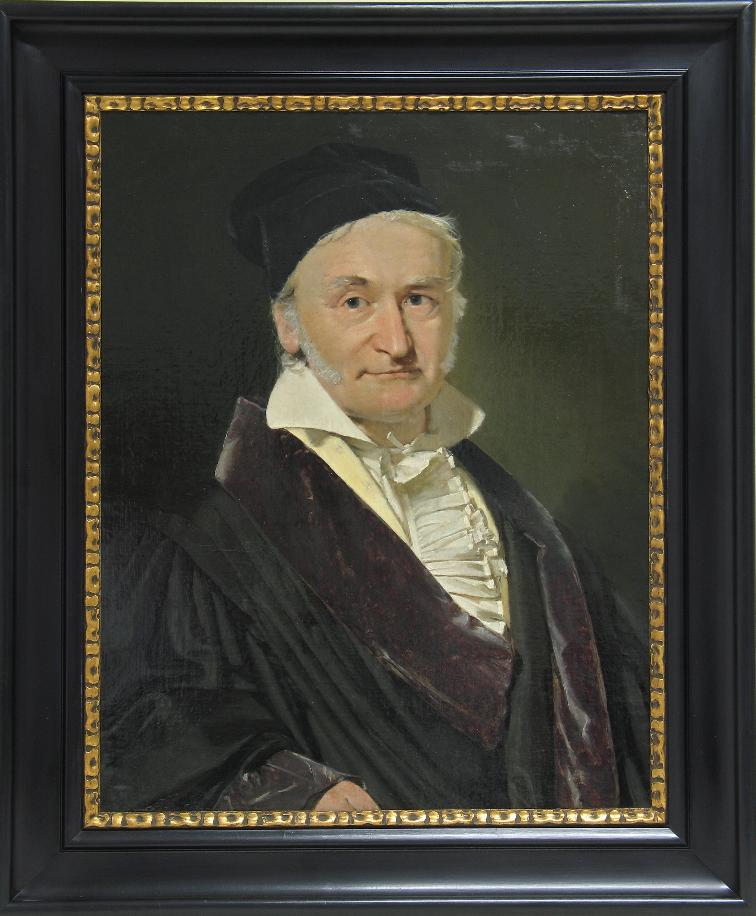
The greatest mathematician ever?

Students often ask me who is the greatest mathematician of all time.  (Whether or not they are truly curious is debatable … they are masters at trying to get me off topic!)  While it can be a sometimes contentious debate, most people will agree that the honor goes to Carl Friedrich Gauss.  His contributions to mathematics, statistics, physics, astronomy and surveying (not to mention his inventions) certainly rank him at the top.

For those of you interested in learning more about the “greatest” mathematician of all time, here are a few places you can go:

  • For a general overview of his life and contributions, click here.
  • For a more detailed look at his life and contributions, this website from professor Douglas Ravenel at the University of Rochester gives you a plethora of links, click here.
  • For those of you looking for an actual book, check out this selection: Gauss – Titan of Science by G. Waldo Dunnington

Wherever you go, enjoy!  You will not be disappointed.

The unique personality of a young mathematician.

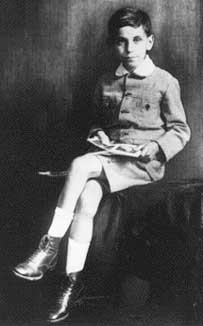
A young genius ...

A young genius …

One of the all time great mathematicians was Paul Erdős.  Erdős published more original mathematics than any other mathematician in history.  However, Erdős was more than a mathematician.  He was also one of the most unique personalities in all of mathematics.  This “uniqueness” started at a young age.

Upon meeting a new “friend”, Erdős often introduced himself in a mathematical way.  Sometimes he would ask “how many ways can you prove the Pythagorean Theorem?”  (Erdős himself knew 37 different proofs by his early teens!)  Other times, he would ask a computational question.  Once, when 17, he was introduced to 14-year-old Andrew Vazsonyi.  Immediately, without any greeting, he asked Vazsonyi to give him a four digit number.  Without blinking, Erdős was able to square the number in his head.  However, he apologized for not being able to cube the number.  As he said, “I am getting old and decrepit and cannot tell you the cube.”  Amazingly, by the age of 17, he already viewed himself as an old man who was losing his mathematical talents.  In fact, this obsession lasted all 83 years of his life.  Fortunately, for the mathematical community, this obsession never came to be.  He produced original mathematics up until the day he died.

If you would like to learn more about Paul Erdős, you can click here to get his biography.

If you would like to read some great books about Paul Erdős, you can look for one of these:

  • The Man Who Loved Only Numbers by Paul Hoffman  (Click here to read my brief synopsis.)
  • My Brain is Open by Bruce Schechter  (Click here to read my brief synopsis.)

These are great books about one of the greatest talents and most compassionate human beings in the mathematical world.  You will not be disappointed.